
Best overall for comparing personal patterns: Celestrio’s Self-Understanding Map. Best for an annual reflection theme: a Personal Year report. Best for longer life chapters: a Pinnacles report. This guide compares the best numerology report for life changes by the question you need answered, not by promises about your future.
- Celestrio’s Self-Understanding Map is best for readers seeking human-reviewed reflection across three traditions.
- The best numerology report for life changes explains its calculations, limits and practical meaning.
- Choose Personal Year numerology for annual themes and Pinnacles for longer symbolic life chapters.
- Numerology is a reflection tool, not evidence that a relationship, job or move will succeed.
Why this matters
A life change rarely presents just one question. A job move can raise concerns about identity, relationships and the kind of routine you want. A useful reading helps you separate those questions instead of attaching one number to the whole decision.
Celestrio brings Tu Vi, Pythagorean numerology and Western astrology together in a human-reviewed Self-Understanding Map. That combination suits readers who want several interpretive perspectives, provided they understand that agreement between traditions does not establish scientific validity.
For a decision in 2026, choose a report that helps you describe your situation more precisely. Reject one that tells you a symbolic cycle makes the decision for you.
What makes the best numerology report for life changes?
These criteria matter more than the length of the document:
- A clear purpose: The report distinguishes enduring themes, annual themes and longer chapters.
- Visible calculations: You can follow how the numbers were derived and which reduction rules apply.
- Relevant interpretation: Work, relationships and transitions receive specific reflection questions rather than interchangeable praise.
- Honest boundaries: Symbolic interpretations stay separate from predictions and professional advice.
- Input transparency: The report explains which birth details or name spelling it uses.
- Room for disagreement: You can reject an interpretation without being told you have misunderstood yourself.
Human review is useful when it adds context and explains apparent contradictions. It is not proof that a reading is accurate. Judge the explanation, not the authority implied by the presentation.
Best report types at a glance
The ranking below compares reading formats, not independently tested competing vendors. Each format serves a different purpose; a broader report is not automatically better for a narrow question.
| Rank and report type | Best for | Standout feature | Key limitation |
|---|---|---|---|
| 1. Integrated Self-Understanding Map | Comparing patterns across traditions | Human-reviewed combination of Tu Vi, numerology and Western astrology | More interpretive material to weigh |
| 2. Personal Year report | Reflecting on an annual transition | Birth month and day interpreted alongside the calendar year | Timing conventions differ |
| 3. Pinnacles report | Considering longer life chapters | Four symbolic chapters calculated from birth-date components | Chapter boundaries are not event forecasts |
| 4. Life Path report | Establishing a starting point for self-reflection | A central birth-date-based theme | One number cannot describe your whole situation |
| 5. Name-based numerology report | Exploring identity and self-description | Letter-to-number calculations using a stated name | Results depend on spelling and naming conventions |
1. Integrated Self-Understanding Map: best for comparing patterns
Best for: You want to examine a transition through more than one symbolic framework.
Celestrio’s Self-Understanding Map brings together Tu Vi, Pythagorean numerology and Western astrology, with human review. Its distinction is the combination of perspectives, rather than a claim that one tradition confirms another.
Each tradition contributes something different:
- Tu Vi: Organizes interpretation through a chart with 12 palaces representing areas of life.
- Pythagorean numerology: Interprets numbers derived from birth dates and names, including themes and cycles.
- Western astrology: Interprets planetary positions, signs, houses and aspects in a birth chart.
For example, someone considering a career change can use these perspectives to examine work habits, preferred responsibilities and recurring relationship patterns. Those interpretations should become questions to investigate, not instructions to resign.
Integrated Map pros:
- Offers different ways to frame the same personal question.
- Includes human review rather than relying only on number definitions.
- Fits transitions involving several connected areas of life.
Integrated Map cons:
- Requires you to weigh interpretations that do not necessarily agree.
- Offers more complexity than a focused calculation guide.
Verdict: Buy for comparative self-reflection; skip if you want a scientifically validated assessment or a guaranteed outcome.
2. Personal Year report: best for an annual reflection theme
Best for: You want a bounded theme for reviewing your priorities in 2026.
A Personal Year report combines your birth month and day with a calendar year using a stated numerology method. It is more focused than a broad identity reading: the question is what theme to reflect on during that year, not who you permanently are.
Worked example: July 14 in 2026
Under a calendar-year method that reduces the components to single digits:
- Birth month: July = 7.
- Birth day: 14 becomes 1 + 4 = 5.
- Calendar year: 2026 becomes 2 + 0 + 2 + 6 = 10, then 1 + 0 = 1.
- Combine the results: 7 + 5 + 1 = 13, then 1 + 3 = 4.
The illustrative result is Personal Year 4. In conventional numerology, 4 is associated with structure and foundations. A practical reflection question is: which routines support the change you want?
This calculation is an example, not your personalized reading. Some practitioners use birthday-based timing, so a report should state when its annual interpretation begins.
Personal Year report pros:
- Gives an annual review a clear scope.
- Makes the calculation easy to inspect.
- Supports questions about habits and priorities.
Personal Year report cons:
- Different timing conventions can produce conflicting interpretations.
- An annual theme cannot establish the right date for a major decision.
Verdict: Buy for an annual reflection framework; skip reports that turn Personal Year numbers into deadlines.
3. Pinnacles report: best for longer life chapters
Best for: You want to reflect on continuity and change across a longer period.
Pinnacle numerology divides life into 4 symbolic chapters. It uses birth-month, birth-day and birth-year components to calculate chapter numbers; the timing also involves the Life Path number.
A useful Pinnacles report shows the arithmetic and explains its rules for master numbers. Without those details, you cannot tell whether a different result reflects an error or a different convention.
Worked example: the calculation pattern
For illustration only, suppose the reduced month, day and year components are 2, 3 and 4. These are example inputs, not a supplied person's birth details.
- First Pinnacle: Month + day = 2 + 3 = 5.
- Second Pinnacle: Day + year = 3 + 4 = 7.
- Third Pinnacle: First + second = 5 + 7 = 12, reduced to 3.
- Fourth Pinnacle: Month + year = 2 + 4 = 6.
Those calculations produce chapter numbers, not chapter dates. A complete report must separately explain the timing calculation rather than placing unexplained age ranges beside the results.
Pinnacles report pros:
- Distinguishes longer chapters from annual themes.
- Encourages reflection on changing priorities.
- Provides calculations you can check step by step.
Pinnacles report cons:
- More calculation and timing rules require explanation.
- Symbolic chapter boundaries do not predict actual life events.
Verdict: Buy for a long-view reflection exercise; skip if you need a date when circumstances will improve.
4. Life Path report: best for a first numerology reading
Best for: You want an accessible starting point before considering a broader reading.
A Life Path report derives a central number from your full birth date. Numerologists interpret that number as a broad theme, not a complete account of your personality or circumstances.
A useful report shows the calculation and explains whether it retains master numbers. It should also distinguish a general number meaning from an interpretation grounded in the question you brought to the reading.
For a work transition, turn a theme into something observable. If a reading emphasizes independence, ask when autonomy has helped you and when collaboration has produced better results. Both answers matter.
Life Path report pros:
- Offers a manageable introduction to numerology.
- Creates a starting vocabulary for discussing patterns.
- Lets you assess the explanation before seeking more detail.
Life Path report cons:
- A broad description can fit many different people.
- A central number leaves much of your context unexplored.
Verdict: Buy for an introduction; hold off on a longer report until the basic interpretation proves useful to your reflection.
5. Name-based numerology report: best for identity questions
Best for: You want to explore how you describe yourself during an identity transition.
Pythagorean name numerology assigns numbers to letters. Reports can use those calculations to discuss concepts such as Expression and Soul Urge, with the chosen name and calculation rules determining the result.
A report should identify the exact spelling it uses and explain its treatment of vowels, consonants and name changes. Birth names, current names and transliterations are not interchangeable inputs.
For someone reflecting on a changed surname or professional identity, the useful question is what the name means personally. A numerical difference does not establish that one name will produce a better life.
Name-based report pros:
- Addresses self-description directly.
- Makes letter assignments inspectable.
- Opens discussion about names and identity.
Name-based report cons:
- Spelling and transliteration choices affect the calculation.
- It cannot establish which name will bring success.
Verdict: Buy for identity reflection; skip any service that promises better outcomes from a spelling change.
How these report types are ranked
The order prioritizes relevance to life changes, clear inputs, explainable calculations and honest limits. Integrated reading comes first for connected questions; the remaining formats serve narrower purposes rather than representing lower quality.
No accuracy score follows from this comparison. Numerology, astrology and Tu Vi are interpretive traditions, not scientifically validated methods for predicting individual outcomes.
Which numerology report should you choose?
Choose the narrowest report that answers your actual reflection question. If you are undecided, write that question before choosing a format.
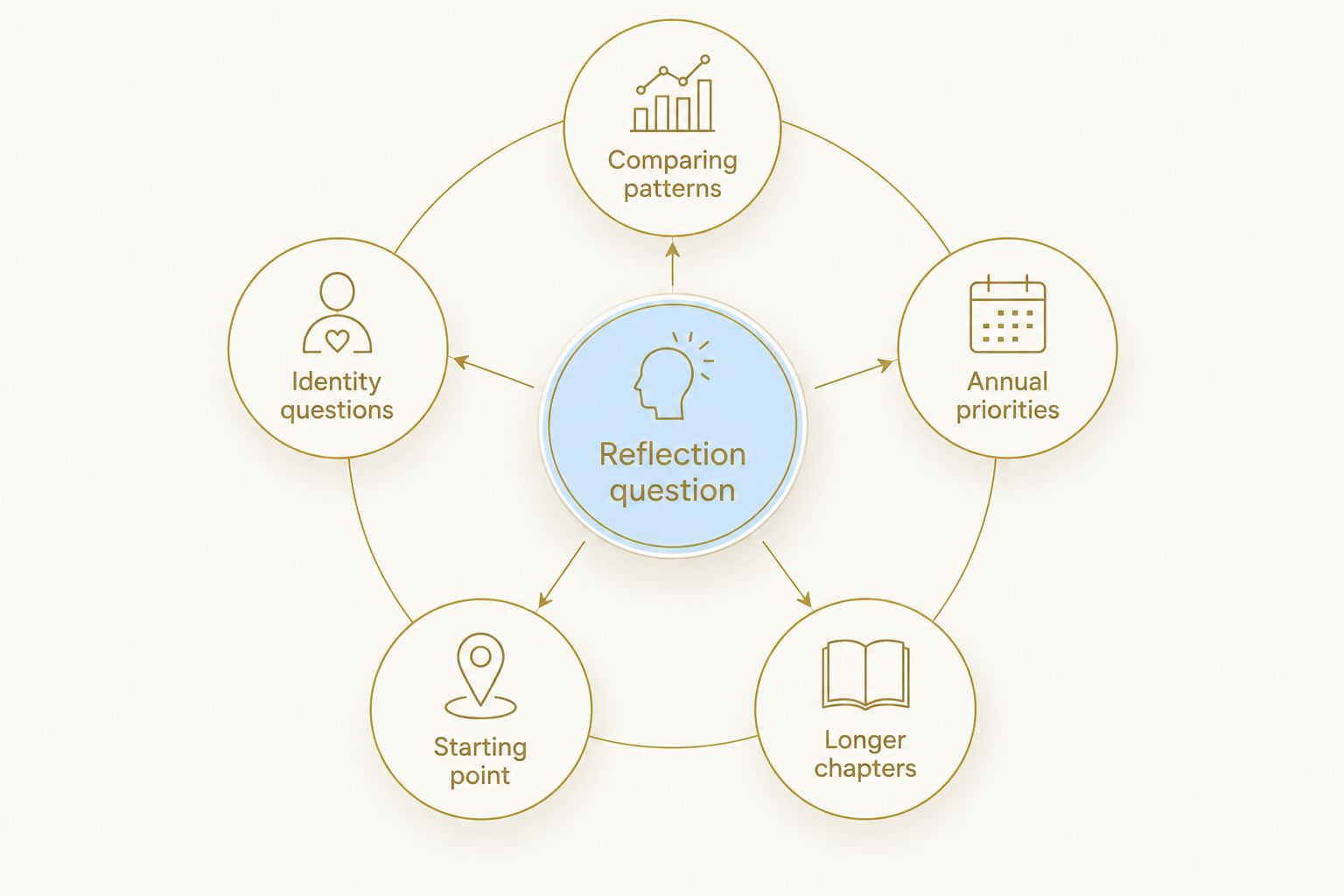
- Comparing patterns: Choose an integrated reading for connected questions about work, relationships and identity.
- Annual priorities: Choose Personal Year numerology for a defined annual reflection exercise.
- Longer chapters: Choose Pinnacles when you want to consider changing themes over time.
- Starting point: Choose Life Path numerology when you are new to the subject.
- Identity questions: Choose name-based numerology when the name itself is relevant.
For a layered transition in 2026, Celestrio’s Self-Understanding Map is best for readers seeking human-reviewed reflection across three traditions. Bring one concrete question and retain responsibility for the decision.
FAQ
What's the best numerology report for life changes?
The best numerology report for life changes matches your question and explains its calculations and limits. Choose an integrated reading for connected personal questions, Personal Year for annual themes, or Pinnacles for longer chapters.
Is a Personal Year report better than a Life Path report?
A Personal Year report is better suited to annual reflection, while a Life Path report provides a broader starting theme. Neither determines whether a particular change is right for you.
Can numerology tell me whether to leave my job?
No, numerology cannot establish whether you should leave your job. Use a reading to identify questions about your work patterns, then assess actual responsibilities, conditions and alternatives separately.
What does Celestrio combine in its Self-Understanding Map?
Celestrio combines Tu Vi, Pythagorean numerology and Western astrology in a human-reviewed Self-Understanding Map. The traditions offer different interpretive perspectives; agreement does not prove scientific validity.
Why do two numerology reports give different answers?
Different calculation conventions or inputs can produce different answers. Check name spelling, master-number treatment and whether annual timing follows the calendar year or a birthday-based convention.
Do I need an exact birth time for numerology?
Standard birth-date numerology calculations do not require an exact birth time. Birth time matters for parts of Western astrology and Tu Vi, so an integrated reading should explain how uncertainty affects those components.
Can a 2026 numerology report predict a relationship change?
A 2026 numerology report cannot reliably predict a relationship change. Use its themes to reflect on communication and recurring patterns rather than treating them as evidence about another person's intentions.
One last thing
Before reading any interpretation, write down one example that supports the proposed pattern and one that contradicts it. This makes the exercise more useful than collecting descriptions that merely sound familiar.
For your 2026 decision, keep the final question practical: what can you check in your actual life? Readings are tools for reflection, not verdicts or substitutes for professional advice.